
 Nopalitos for the World
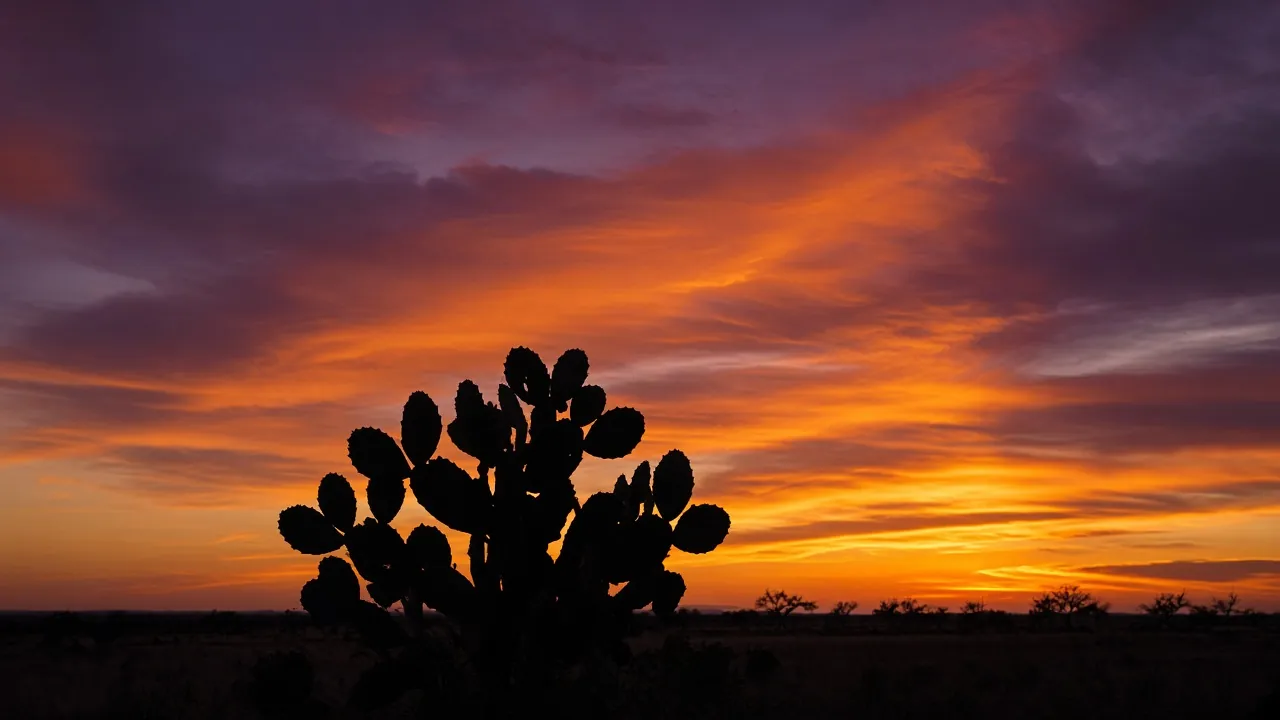
A manifesto · Mariano · Draft v1, November 2026
Nopalitos for the World
This is a personal text, not marketing. It says why this work exists. What is planned, what is known and what is not yet measured is on the home page and the pilot page.
I. Water, the oldest wealth
Water is the first wealth of every people, and the last thing any of us can live without.
Long before oil, gold or territory, human beings settled, prospered and fought along the banks of rivers. Many of the conflicts that mark our history have, at their root, a struggle over scarce resources. Of all of them, water is the most precious, because nothing replaces it. A nation can trade for fuel. It cannot trade for rain.
I write this because I believe we are living at the threshold of a question every generation eventually faces: what will we eat, and what will our animals eat, when the water does not come?
II. The droughts always return
Great droughts are not only a forecast. They are a memory.
Whatever one believes about the causes of a changing climate, history leaves no doubt that severe droughts come back in cycles. In the 1930s, the Dust Bowl turned the Great Plains into a sea of blowing soil and drove families from their land. In the 1950s, Texas lived through its drought of record. Grass disappeared, wells failed, and ranchers kept their cattle alive by burning the spines off wild prickly pear so the animals could eat it.
That image stays with me. When everything else had failed, the humble nopal was still standing, still green, still holding water in its pads. Our grandparents did not need a theory to understand it. They needed something that would survive, and they found it.
The question is not whether the next great drought will come. It is whether we will be ready when it does.
III. Why technology alone is not yet enough
I admire what human ingenuity has achieved with water. We desalinate the sea, recycle what we use, and draw water from places our ancestors could never reach. These advances are real, and they will grow.
But today they do not reach everyone. There are more than eight billion of us, and many of those who suffer most from drought live far from the coast, far from capital, and far from the infrastructure that great machines require. The family whose herd is dying this summer cannot wait for a plant that has not been built.
Nor can we wait for forests. Reforestation is noble and necessary, but a forest takes generations. Hunger does not.
What we need, alongside every other effort, is something living: a crop that grows where little else will, that can be planted at scale within a few seasons, and that turns scarce water into food.
IV. The plant that holds on
That living answer already exists. It is the nopal, the prickly pear cactus.
The nopal breathes at night. While other plants lose water to the midday sun, it keeps its pores closed and opens them in the cool of darkness, losing far less water for every kilogram it grows. Its pads are reservoirs, nearly nine parts water to one part dry matter. It is perennial: cut it, and it grows back, season after season, without replanting.
I do not claim the nopal needs no water. It needs less, and it uses what it receives with extraordinary efficiency. That honest difference is the whole of its promise.
And unlike almost any other crop, it can be multiplied quickly. A single healthy pad becomes a plant. A field of pads becomes a living reserve of feed and water, ready for the dry months and the dry years.
None of this is new. The nopal has walked beside the peoples of Mexico for some seven thousand years, and long before it was a crop, it was a covenant. In the Mexica account of the founding of Tenochtitlan, Huitzilopochtli tore out the heart of the traitor Cópil and cast it into the lake. From that place the nopal rose out of the water, and upon it came to rest the eagle: Huitzilopochtli himself, victorious over Cópil. On the ancient stone known as the Teocalli of the Sacred War, the eagle's cry is carved as atl-tlachinolli, water and fire, the old sign of war. Life rising from defeat, water joined to war: the symbol at the heart of a nation already held the question we face today.
Five centuries later, the same plant can help us choose water over war.
V. From pad to protein
We begin with cattle, because they are the ones best prepared to receive this gift.
A ruminant can eat spineless nopal fresh, chopped and mixed with dry forage, with no processing at all. Or the pads can be enriched before feeding, raising their value as feed. Either way, a plant that thrives on little water becomes nourishment for animals, and through those animals, protein for people.
This is the first step, not the last. Feeding human beings directly and at scale from the nopal is a different and larger chapter, one that deserves its own research and its own care. But every great journey begins with what is possible today, and today, what is possible is a ranch that can keep its herd alive through a drought.
VI. Every field a laboratory
A field of nopal is more than a feed reserve. It is a living laboratory.
Beneath every healthy plant lies an invisible community of native microorganisms, adapted over centuries to that particular soil and climate. As our plantings grow, we intend to study them: to learn how the plants grow, to collect the native strains that sustain them, and to multiply those strains so that they can restore other soils.
In this way, the nopal and the soil become one project. The plant feeds the herd, the herd returns fertility to the land, and the knowledge gathered in each field becomes a tool for the next. What begins as a few hectares of cactus can grow into a research institute in the open air, devoted to biotechnology for the soil.
VII. Fire for everyone
The ancient Greeks told of Prometheus, who took fire from the gods and gave it to humanity. Knowledge that keeps people alive should not be locked away. It should be carried, shared and kindled in many hands.
That is the true aim of this work: food security and food sovereignty for the communities that need them most. Food security means that people have enough to eat. Food sovereignty means that they can produce it themselves, on their own land, with knowledge they own.
For that reason, this technology must be decentralized. Not held by one company, one government or one institution, but spread among ranchers, farmers, researchers and neighbors who can grow it, adapt it and teach it in turn. We have watched this happen in our own time with artificial intelligence: the most advanced tools appear first in a few hands, and soon after, open versions emerge that anyone can run on their own computer. Humanity has begun to decentralize its most powerful tools. Food should follow.
We will sustain this work honestly. Some may ask for private training, dedicated support or specialized services, and it is fair that such work be paid. But the core knowledge belongs to the world.
VIII. Those who lit the way
I did not invent this path. I walk it in the footsteps of others.
Jairo Restrepo Rivera, with his proposal for organic agriculture and his tireless teaching, showed that farmers can make their own inputs and recover their own soils. Sebastião Pinheiro defended the dignity and knowledge of those who work the land. Ignacio Simón Zamora has spent decades teaching farmers to produce their own biological inputs and to recover their soils, proving that this knowledge can be shared and still sustain the work. Masanobu Fukuoka, in The One-Straw Revolution, taught that working with nature, rather than against it, can feed us more wisely. Many other researchers and practitioners, known and unknown, have given their knowledge away so that others could be free.
And before all of them, there was my father, Don Mariano, who first showed me the bond between nature, science, humanity and God, and who brought biotechnology to the soil when few others were thinking about it.
IX. What we promise, and what we do not
A vision this large must be held with humility.
I do not claim that the nopal will end war or hunger. Human conflict has many roots, and no single plant can pull them all. I do not claim that every promise made about this crop is proven. Some are, some are not, and we will say which is which.
What I do promise is this: we will measure before we speak. We will publish what we learn, including what does not work. We will distinguish what the literature reports from what our own fields show. And we will never sell hope we cannot support with evidence.
If we are faithful to that standard, then in the places and among the people who need it most, this work can help save lives. Not all lives, not every place, but many. That is enough to begin.
X. Nopalitos for the world
I dream of a day when the dry lands of the earth are crossed by green rows of nopal: thousands, and one day perhaps millions, of square kilometres of living reserve. Not as a monument, but as insurance: water stored in green pads, feed waiting for the dry season, soil coming back to life beneath them.
It begins small. A few hectares in South Texas, planted with care, measured with honesty, and shared openly. From there, one rancher teaches another, one field seeds the next, and the knowledge travels further than any of us could carry it alone.
Droughts will always return. The nopal is how we prepare for them.
Nopalitos for the world.
Mariano
From the vision to the ground
See where it stands today.
Nothing is planted, operating or for sale. The pilot is planned; land, date and supplier are to be confirmed.