
 Nopalitos for the World
KupuriBiotech · The pilot · Tilden, Texas
A small pilot, planned with care.
Two hectares (4.94 acres) of spineless forage nopal in South Texas, to be measured from the first day so that Texas data come first.
Planned. Land, date and supplier to be confirmed. Nothing is planted, operating or for sale.

Status of the pilot. Planned. Land, date and supplier to be confirmed. The numbers on this page are planning parameters or ranges from published literature. None has been measured at Tilden. Every value appears in metric and U.S. customary units.
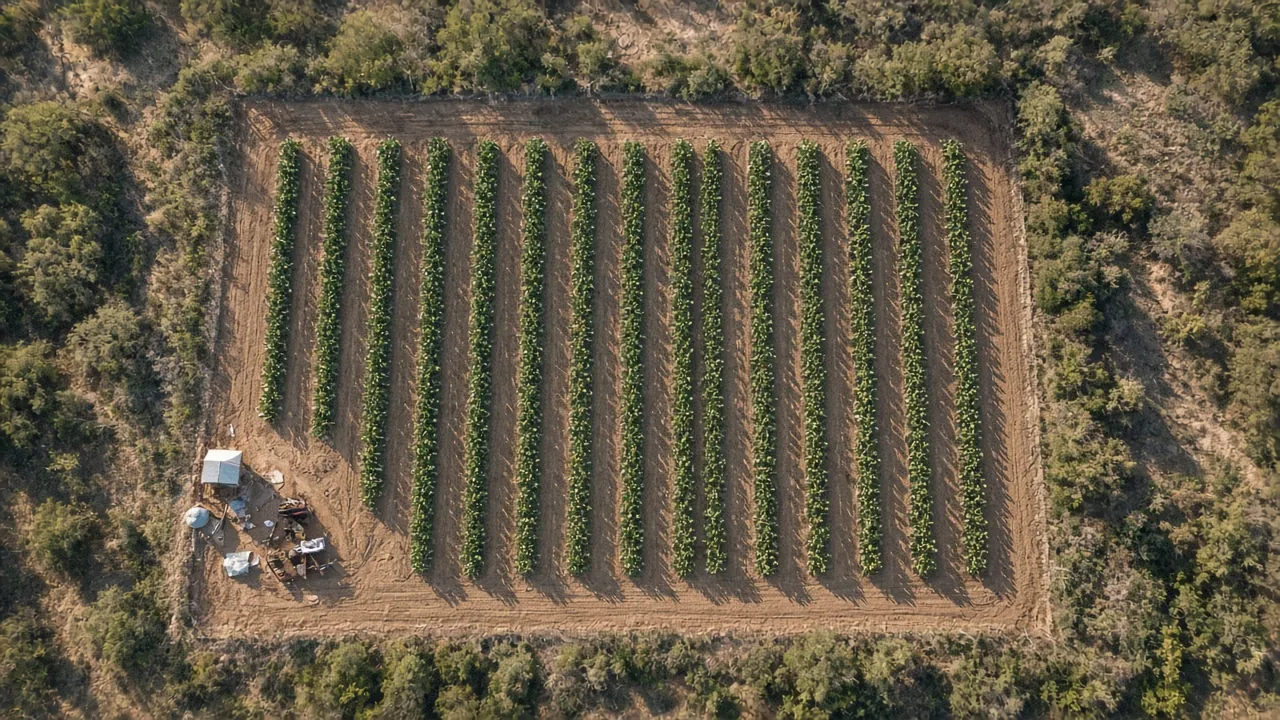
About the photographs. The images on this page are illustrative. They do not show the Tilden pilot, which has not been planted, nor KupuriBiotech operations, which have not begun.
Where it stands today
Designed on paper. Not yet in the ground.
This page says plainly what is decided and what is still open, and it will change only when the facts do.
Set in the plan Plan

Size
2.00 ha (4.94 acres) of planting, deliberately small.
Planting
40,000 pads of a spineless forage type, at 20,000 pads per hectare (about 8,094 per acre).
Method
Records start before the first pad is planted and follow each lot through establishment, the first winter and every harvest.

Area
Tilden, in the brush country of South Texas.
Still to be confirmed To be confirmed
Land
The specific tract is not confirmed.
Planting date
Not set. It depends on local frost history and on delivery of the planting material.
Supplier and variety
The supplier of the pads is not confirmed, and neither is the exact variety.
Results
There are none yet. No survival, water, yield or protein figure on this site comes from Tilden.
Planned. Land, date and supplier to be confirmed. KupuriBiotech is not operating. Nothing described here is a product, a commercial offer or an invitation to invest.
The plan
Two hectares planned. Forty thousand pads to plant. Texas data first.
A small planned planting, to be measured with care once it is in the ground, so that Texas data come first.
The pilot is deliberately modest in size and deliberately rigorous in method. The plan is to plant two hectares (4.94 acres), on a date still to be confirmed, with 40,000 pads of a spineless forage nopal at 20,000 pads per hectare — about 8,094 per acre — inside a block of roughly 2.4 hectares (6 acres) that leaves room for headlands, staging and equipment.
Its first year is about establishment rather than output: what share of the pads roots and sprouts, how much water the stand actually uses, how the plants come through their first winter, and how quickly new pads form. Those measurements become the basis for every later decision on density, irrigation, fertility and harvest timing.
Forage nopal is not new. Ranchers, universities and public programs in Mexico have grown it and fed it to livestock for generations, and that work is the starting point here. What is missing is local data. Tilden lies in the brush country of South Texas, with hot summers, irregular rainfall and the occasional hard freeze: close enough to the conditions under which forage nopal is grown elsewhere to be a fair test, and different enough that only local measurements can answer the questions that matter to Texas producers.
| Status | Planned Land, date and supplier to be confirmed |
|---|---|
| Location | Tilden, Texas South Texas brush country · specific tract to be confirmed |
| Planned pilot area | 2.00 ha 4.94 acres (2.00 × 2.47105) |
| Planned block | ≈ 2.4 ha ≈ 6 acres, incl. headlands, staging and equipment |
| Planned planting material | 40,000 pads Spineless forage type · variety and supplier to be confirmed |
| Planned density | 20,000 pads/ha ≈ 8,094 pads/acre (project decision) |
| Planting date | To be confirmed set by local frost history and delivery of the planting material |
| First regular harvest | To be confirmed a Mexican rainfed technical sheet starts cutting 6–12 months after planting1; cut interval set by regrowth at the pilot |
| Who | KupuriBiotech South Texas · Not operating; information only |
The planned 40,000 pads at a glance
Each dot = 500 pads. Two blocks of 1 ha (2.47 acres) at 20,000 pads each.
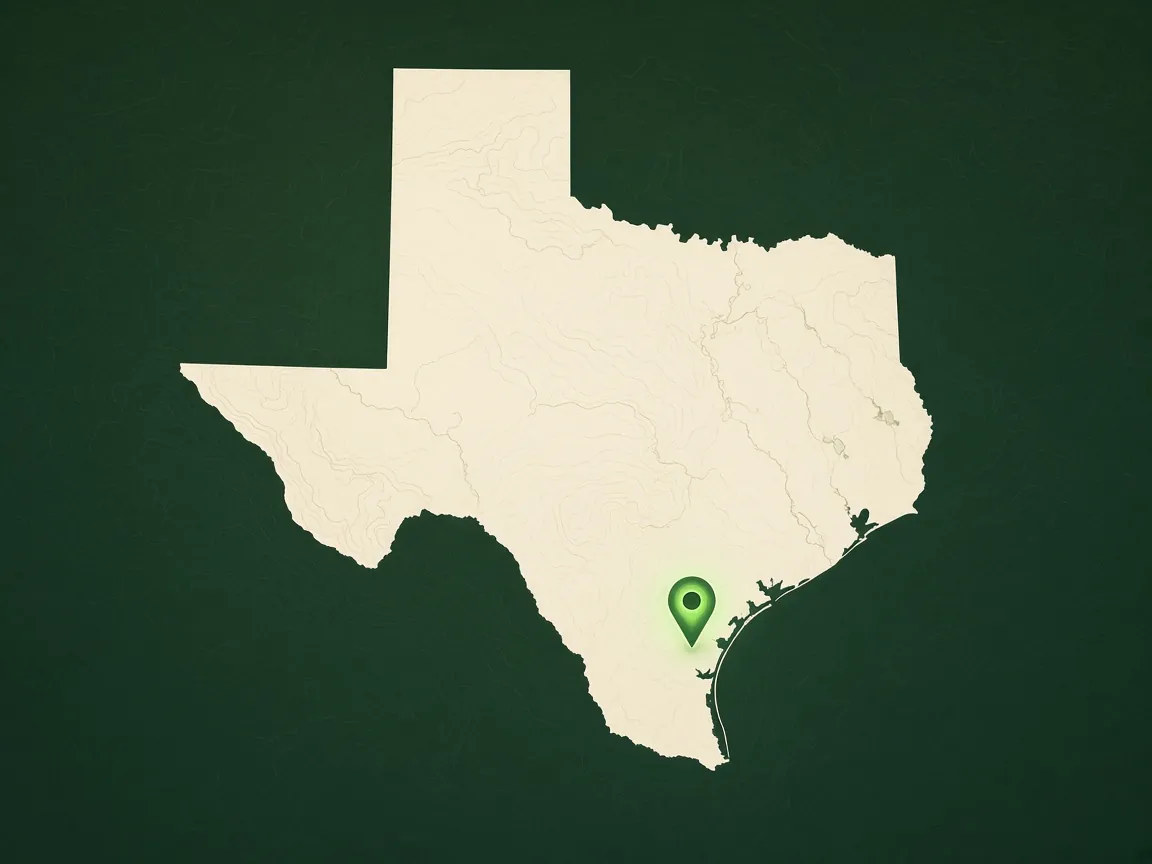 Tilden, Texas · schematic locationIllustrative image · not the Tilden plot
Schematic layout of the planned block
Schematic, not a surveyed plan. Bed and alley geometry will be set on site.
What we will measure
Our numbers will come from our own field and our own lab.
Every figure we publish will be traceable to the field it came from.
The most valuable output of the pilot is information. Records will begin before the first pad is planted and follow each lot through establishment, the first winter and every harvest. Water will be metered, harvests weighed, and representative samples sent to the laboratory on a fixed schedule. The literature ranges shown on the home page will give way, harvest by harvest, to measurements from the pilot itself.
 Illustrative image
 Illustrative image
Why nitrogen fractions. Crude protein is calculated from total nitrogen, so on its own it cannot tell protein from non-protein nitrogen. That is why the plan reports both.
Stages
A calendar set by the plant.
Each stage follows the biology of the crop. There are no calendar dates yet: they will be set by local frost history and the delivery schedule of the planting material.
 Illustrative image
- Now
Pilot designed
The 2 ha (4.94 acre) pilot is designed on paper. Land, planting date and supplier are still to be confirmed.
- 12 to 4 weeks before planting
Site baseline
Survey, soil and irrigation-water analysis, water source confirmed, layout, and the paperwork required for live planting material.
- 4 to 1 weeks before
Ground preparation
Subsoiling where needed, beds, base fertility from the soil test, drip system and receiving area.
- Day 0 to 7
Receiving and planting
Pads inspected, counted and photographed by lot; 40,000 pads planted into dry soil.
- 0 to 90 days
Early establishment
First irrigation, weed control, replacement rules. Survival, sprouting and water recorded.
- 3 to 12 months
Plant architecture · first winter
Formative pruning, irrigation and fertility adjusted, daughter pads counted; minimum temperatures logged.
- To be confirmed
First regular harvest
Fresh mass, dry matter and retained structure recorded at each cut. The date depends on how the plants establish; a Mexican rainfed technical sheet starts cutting 6–12 months after planting1.
- Year 2 onward
Production cycle and our own protocol
Cut interval set by regrowth and measured at the pilot. Internal yield projections, not measured or guaranteed, are to be checked here (see Yields). KupuriBiotech plans to develop and test its own enrichment protocol in an aerobic semi-solid bioreactor (see Enrichment).
Questions
Questions about the pilot?
We welcome conversations with ranchers, researchers and anyone who wants to grow forage nopal in the semi-arid South. If you see something on this page that should be corrected, tell us.
Sources
Numbered references for the literature figures on this page. Each was checked against the page or table shown. KupuriBiotech internal projections are not literature and carry no reference.
- Medina García G., Salinas González H. and Rubio Aguirre F. A. (2001). Potencial productivo de especies forrajeras en el estado de Zacatecas. INIFAP, Libro Técnico No. 1. Technical sheet “Nopal forrajero, temporal” (rainfed forage nopal). https://zacatecas.inifap.gob.mx/publicaciones/Pot_Prod_de_Especies_Forrajeras_en_Zacatecas.pdf. Cited at: p. 54.